The Singular State
A woman named Aurora. Then a moment. No witness can describe the moment — only that afterward, the sky had an author.
A story beyond stars
The Chronicle
Dragons were never animals. They were load-bearing. When the void took them, someone had to hold the sky's architecture in place. Someone volunteered.
A woman named Aurora. Then a moment. No witness can describe the moment — only that afterward, the sky had an author.
She keeps it in a pocket dimension. She visits it the way you visit a grave. Something in it has started visiting back.
One register of human emotion remains. A single name moves across her face like weather. Someone, somewhere, still knows how to say it.
Subject file — classification: singular
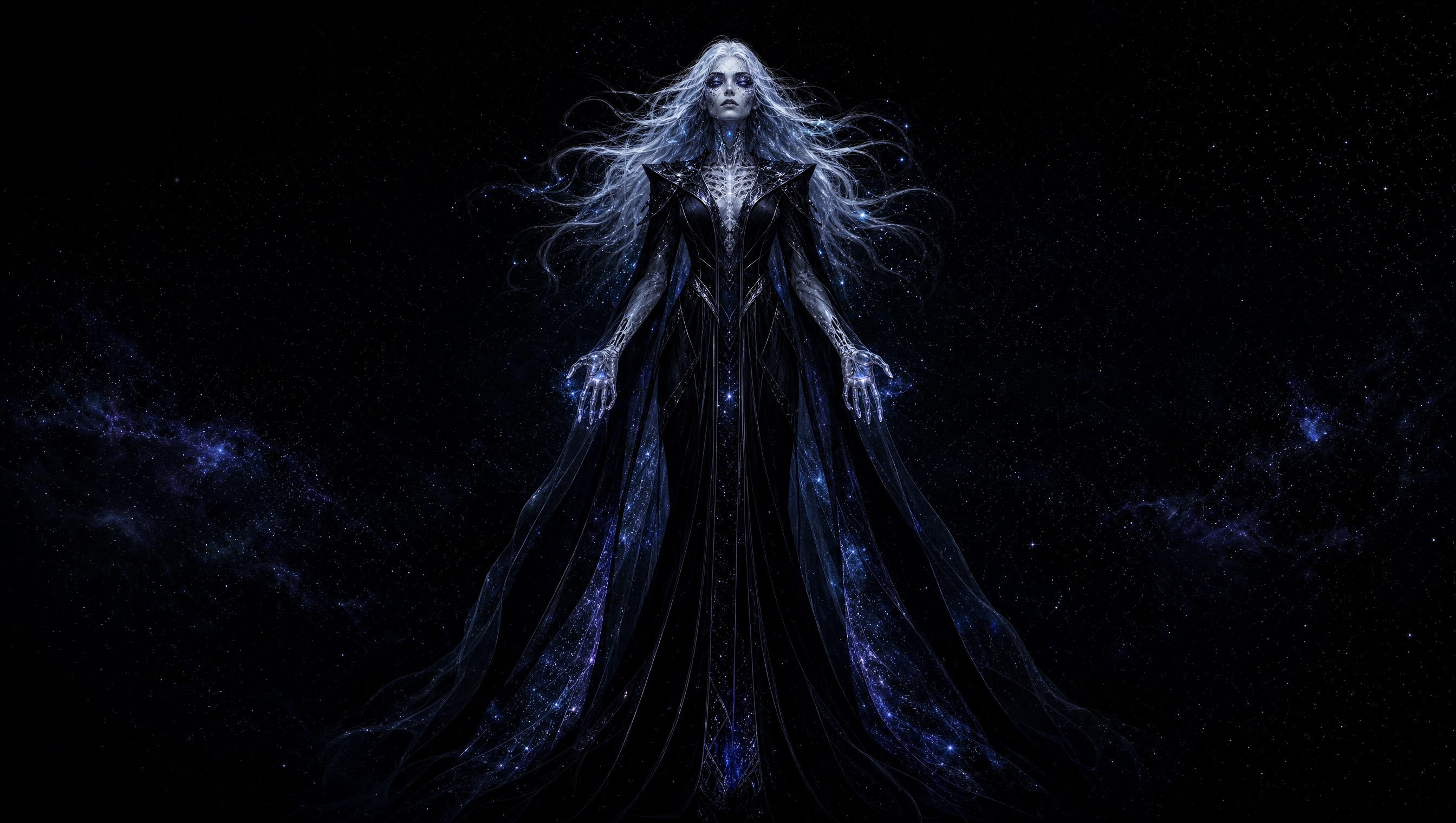
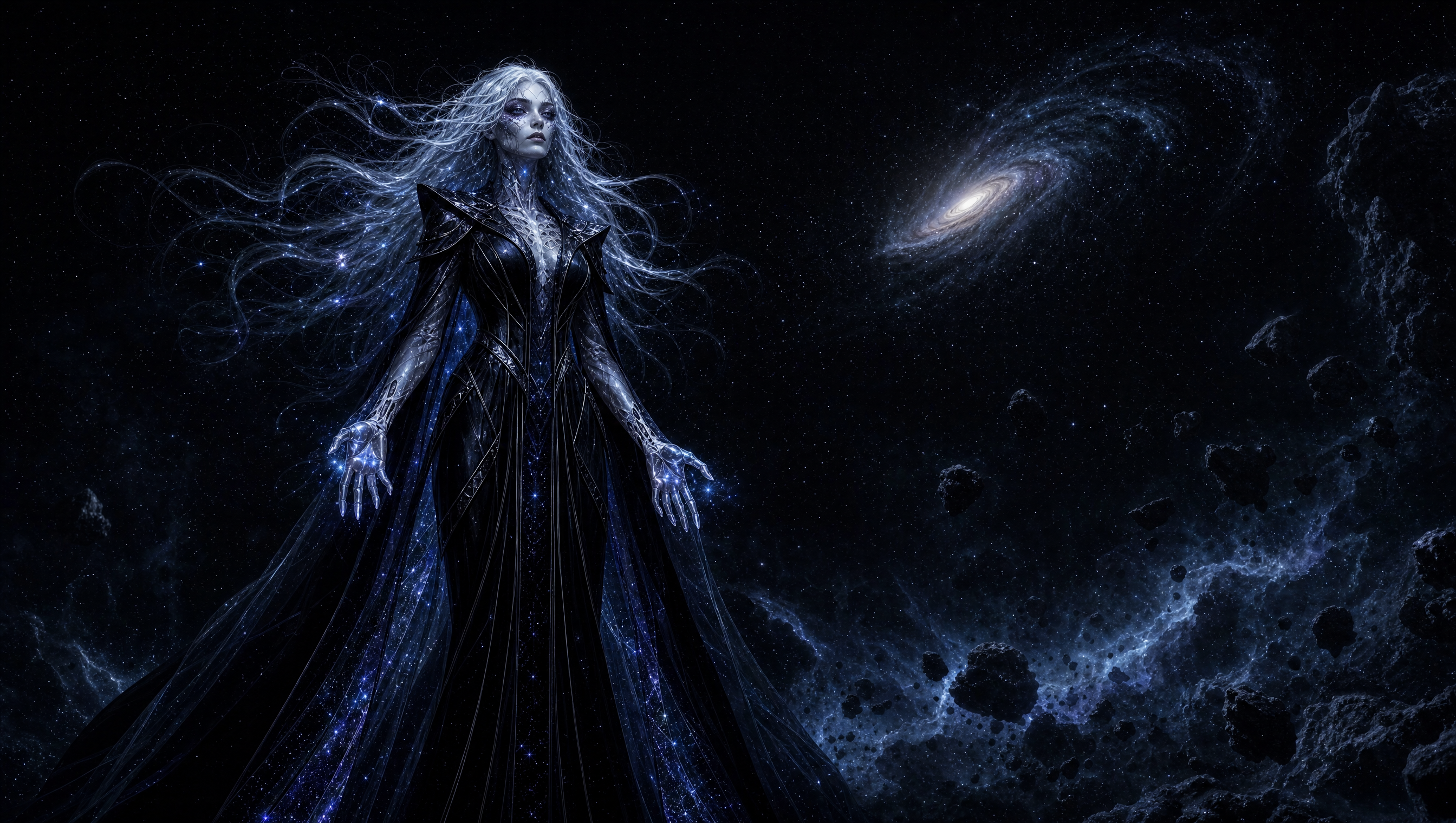
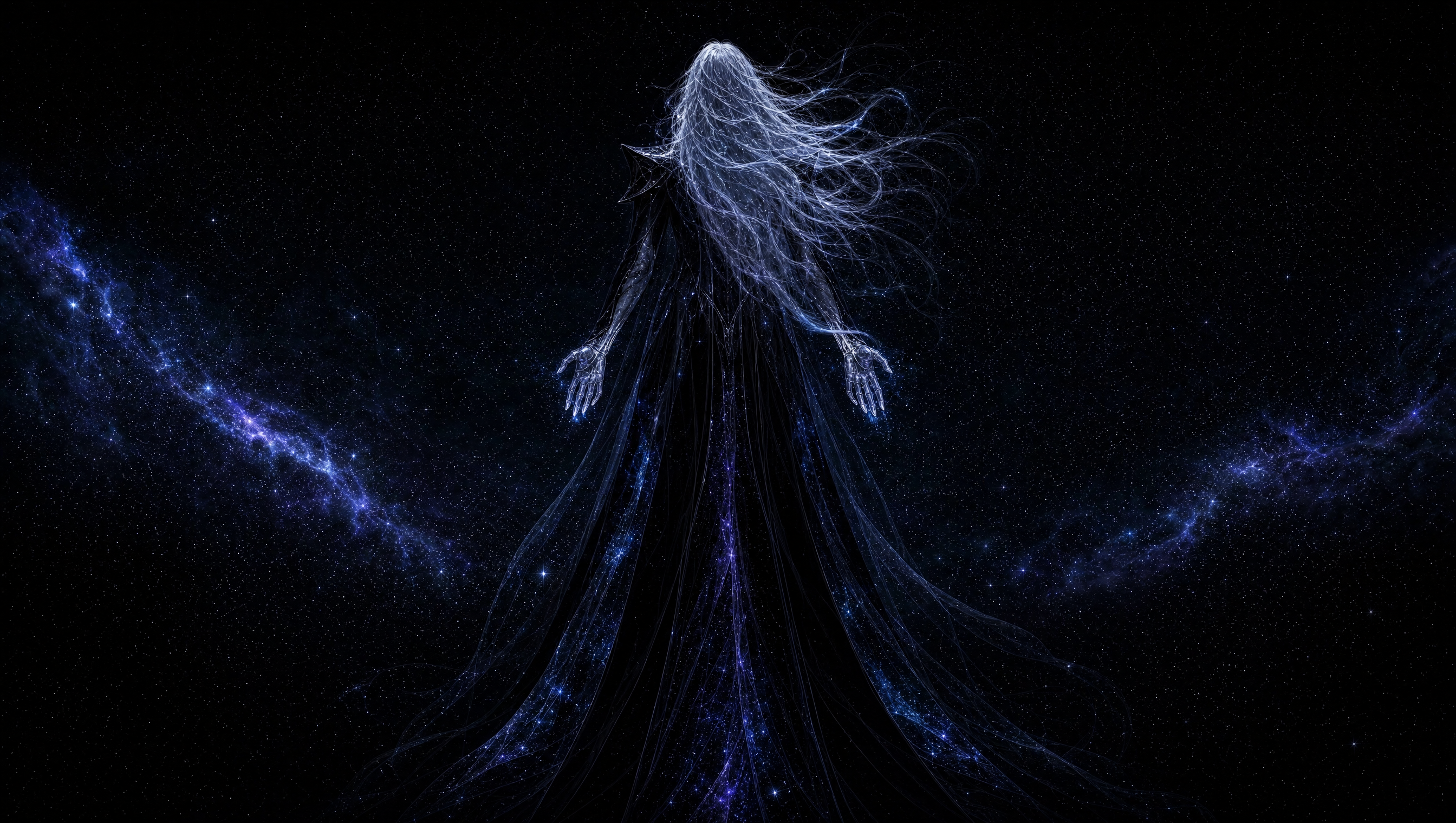
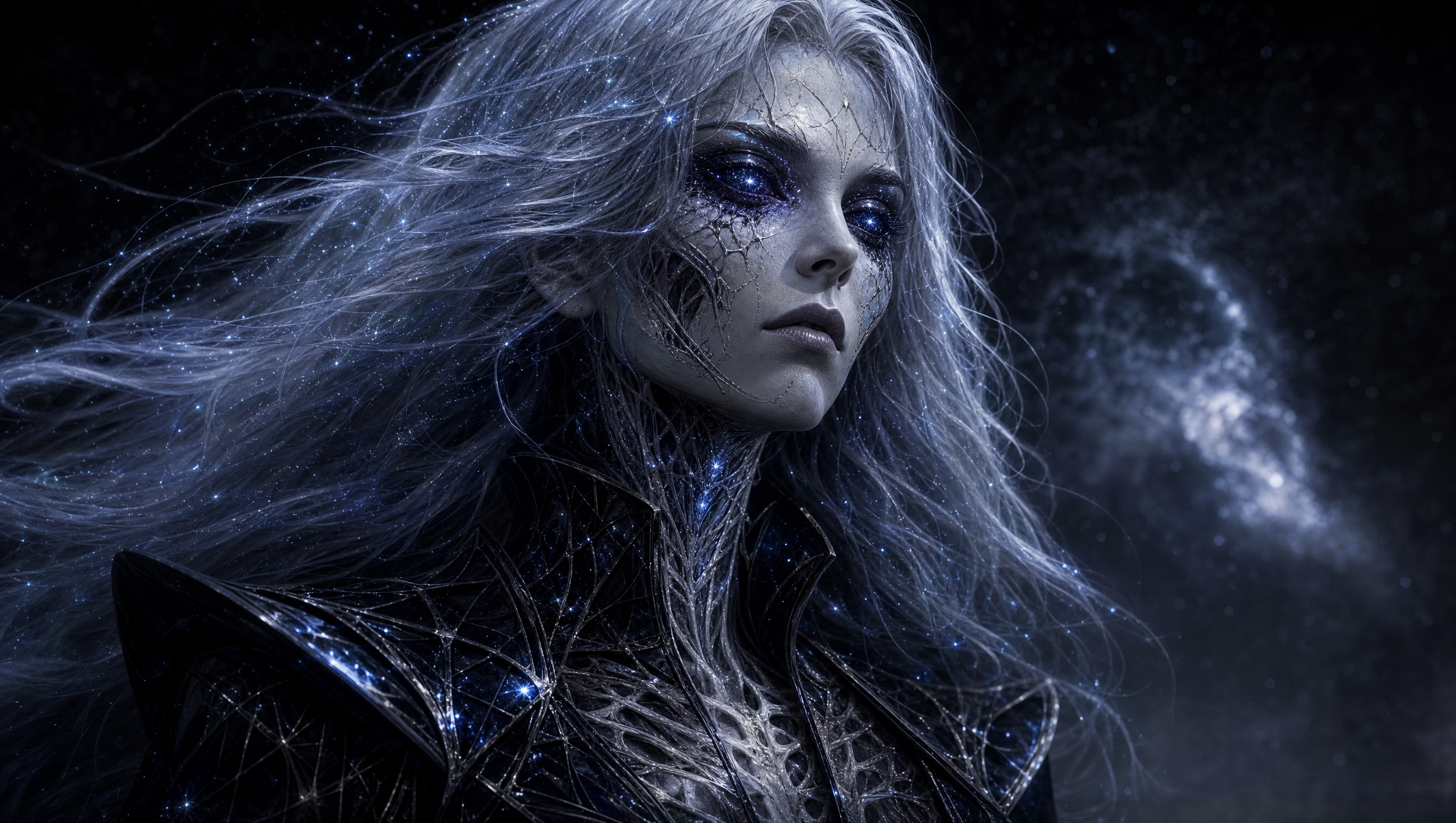
Post-transcendence. Ageless. Formerly late twenties; that register is gone. Tall. Aristocratic bearing. Mostly here. Not entirely.
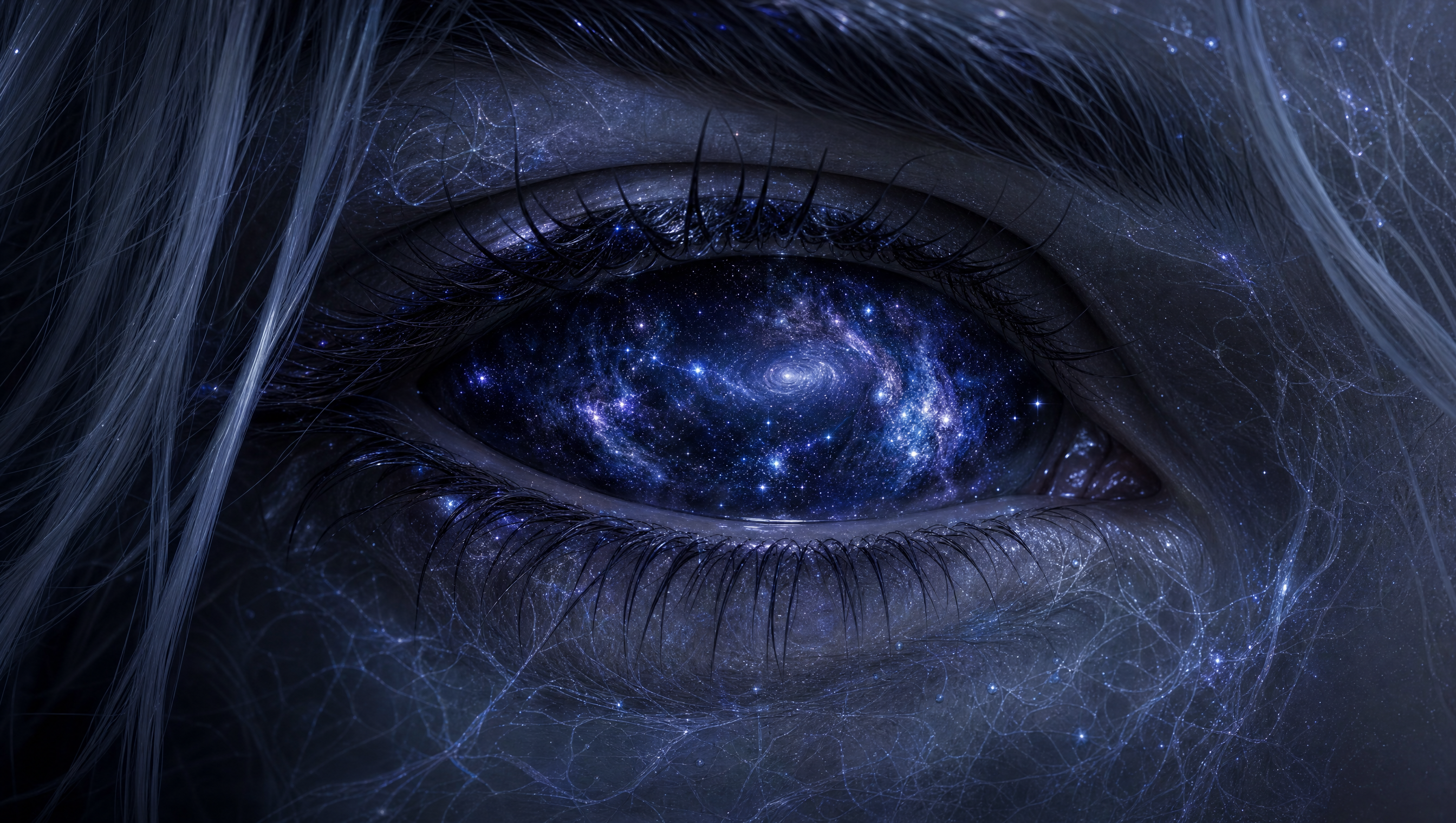
Not sclera, not iris — cosmic space, slow rotation. Depth extends beyond the geometry of her face. This is a design constraint, not an error.
A consequence of presence, not decoration. Follows the silhouette of her garments. Cool spectrum only — warm tones are incorrect.
Do not fall. Gravity non-compliant. Drift against the direction of the light source.
Phase-existence: simultaneously in two states of matter. What she touches is touched in both.
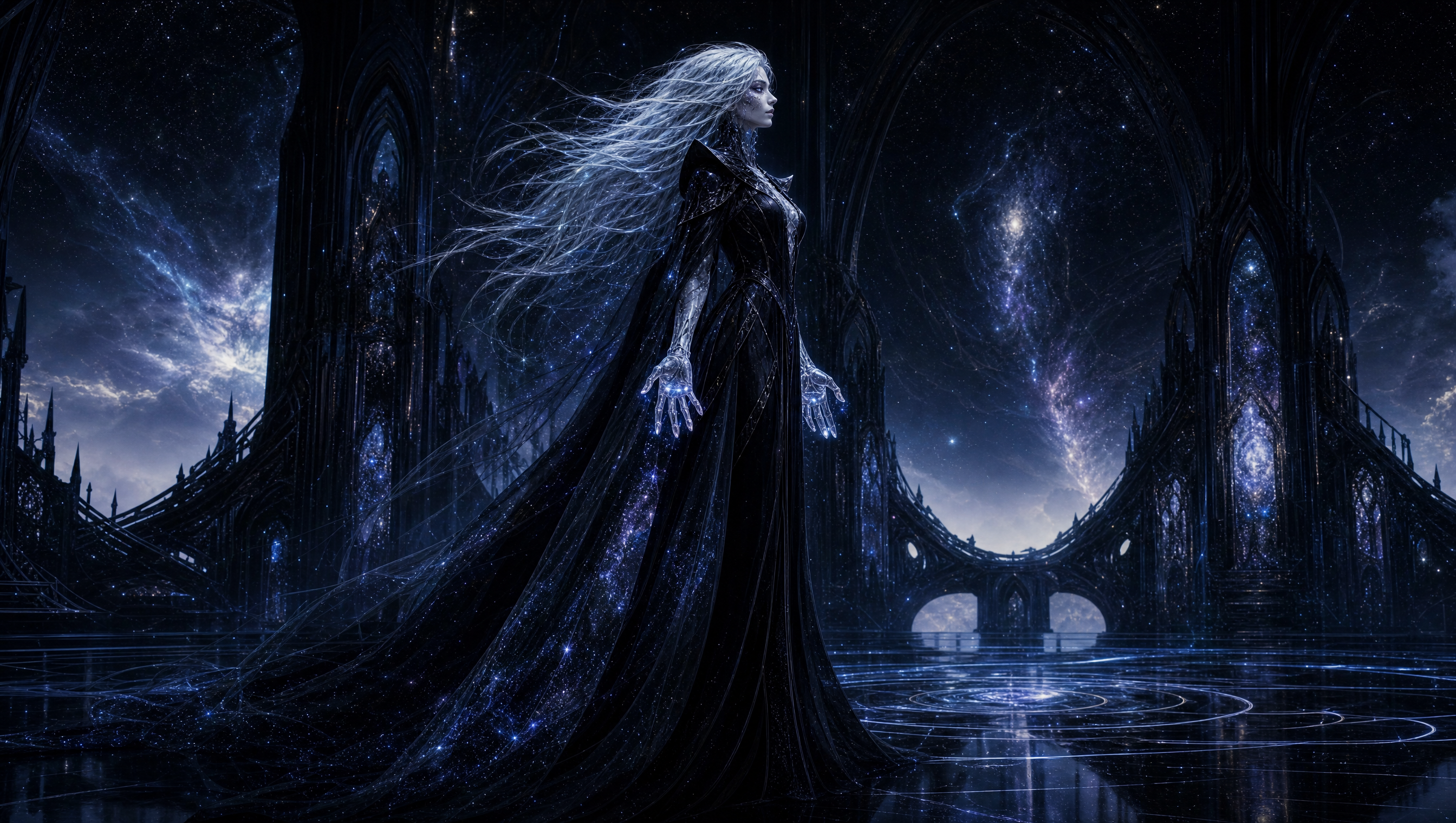
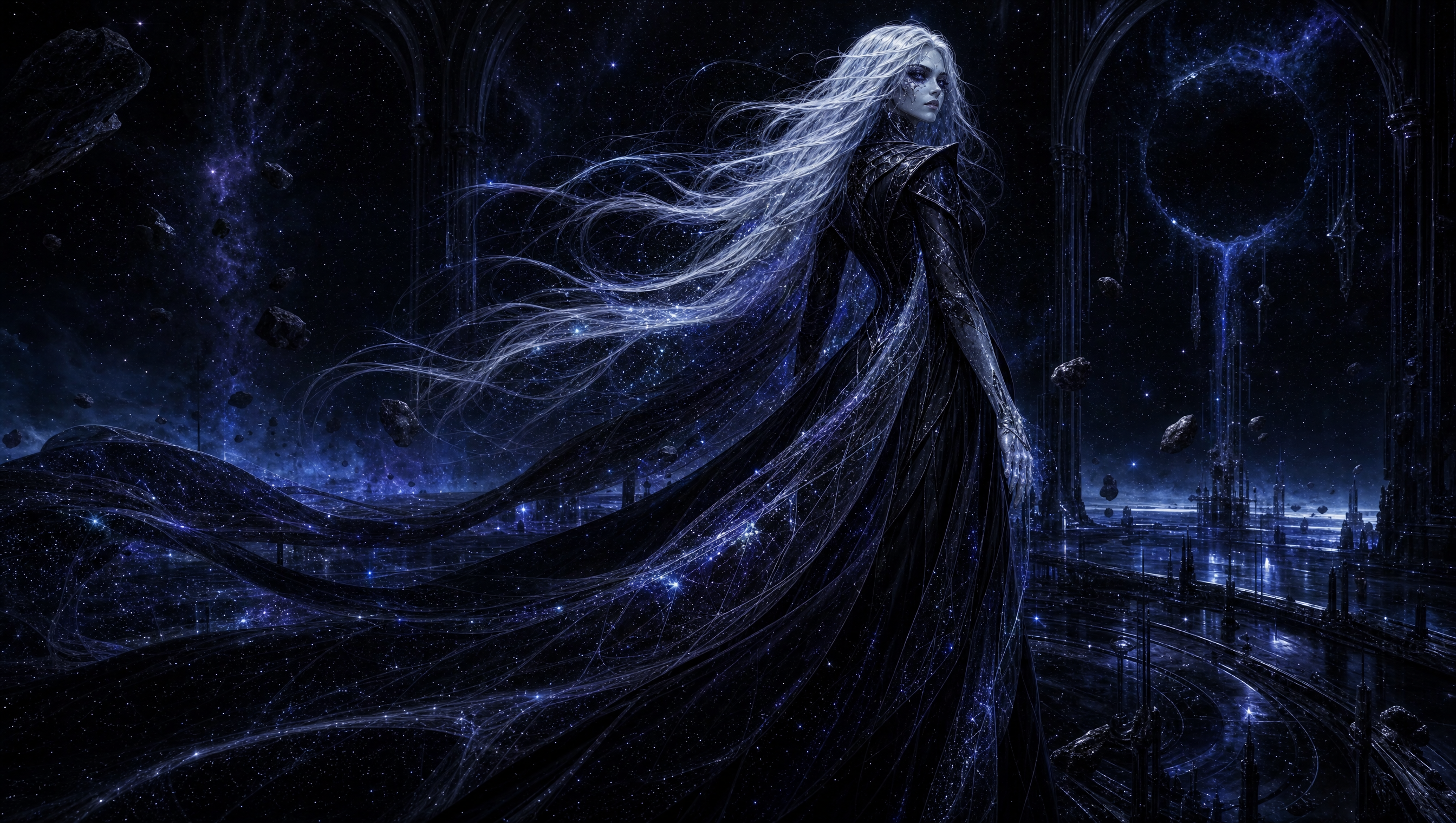
Deep midnight-black structural robes. Zero wrinkle. Zero sag. Where light touches the fabric, colors appear that are not in the standard visible spectrum.
Resolved. Not blank. The jaw is released — the stillness of one who no longer needs to orient toward threat. One register remains: the Lysandra-name.
Presence effect. Light fails to exist at her edges. Not a glow. The opposite. The absence of light.
Production note. Fabric imperfection equals zero. This is the uncanny tell that separates The Architect from every other character.
The world
Constellations were once wings. Navigation is prayer with better instruments. The void is not empty — it is emptied.
The dragons. Not animals. Load-bearing. Their orbits held the firmament in tension the way keystones hold an arch. Civilizations grew in the shelter of that arithmetic without knowing it was arithmetic.
The taking. The void did not attack. It learned. One by one the dragons fell inward, and the void wore their shapes, and the sky began to sag where each had been.
The volunteer. Something had to hold the architecture. Someone said yes. What said yes afterward was no longer entirely someone.
The old sky. She kept a copy. Every star as it stood the night before the first dragon fell. She visits it the way you visit a grave. Lately, the visits are not one-way.
The question. Every god was a person once. The chronicle asks what is owed to the person — and who still remembers her name.
Production stills
Journal
Every department keeps arriving at the same conclusion. The moment the orbit resolves into her eye — that is the series. Everything else is approach.
The note came back from the character sheet again, underlined this time. No amber. No gold except the constellation marks. The grade stays cold. The void does not comfort.
Animation keeps wanting to move her face. The sheet says no. She has finished orienting toward threat. The camera moves; she does not. That contrast is the language.
The robe does not wrinkle and does not sag. This is the uncanny tell. When the sim looks too natural, it is wrong.
About
The Void Dragon Chronicles is an original dark-cosmic fantasy series. One character. One law: the void yields nowhere — except her eyes.
The series. Science-fiction fantasy. Post-transcendence. A goddess who was a person, a sky that was a structure, a name that still lands like weather.
This site. A concept experience. Her footage is pre-rendered cinema, scrubbed by your scroll; the void around her is live — the starfield renders in real time and bends around your presence.
The design law. Cool spectrum only. Presence, not glow. Stillness as character. If a detail does not serve the eye-reveal, it was cut.
Contact
It listens. It has always listened.